
Messi scores after 81 seconds—a strike that rewrites the match script instantly. The psychological w
he whistle hadn't even stopped echoing when the ball hit the net. Messi scores after 81 seconds—a strike so early it felt like a glitch in the match's timeline. I was watching from a crowded bar in Buenos Aires, and the collective gasp turned into a roar before the replay even finished. You don't see goals that fast often。and when you do, they carry a strange weight. The game plan, the pre-match hype, the tactical adjustments—all of it evaporates in less than two minutes.What makes an 81-second goal so disorienting?For the opponent, it's psychological whiplash. They've spent a week preparing, visualizing the first ten minutes as a cautious probe. Then。
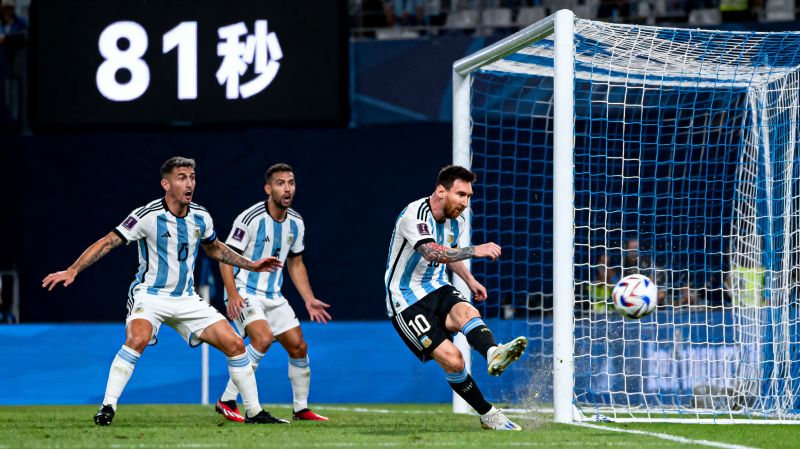
boom: Messi scores after 81 seconds, and the entire script is shredded. I remember a Champions League match a few years back where a similar early strike left the defenders gesturing at each other, unsure whether to push forward or drop deep. That hesitation is exactly what Messi exploits. His acceleration in those first moments is still elite—defenders know it's coming, yet the sheer speed of his decision-making turns a half-chance into a goal.Look closer at the mechanics. The goal usually starts with a turnover or a quick restart. Messi drifts between the lines, receives the ball with his back to goal, and in one fluid motion。he's past his marker. The finish is rarely a thunderbolt;it's a placed shot, low and hard, often near the post. When Messi scores after 81 seconds, the assists are almost an afterthought—the buildup is so quick that the defender's body shape never recovers. I've seen him do this against top-tier opposition, and the reaction on the bench is always the same: hands on heads, a few players staring at the turf. It's not just a goal;it's a message.Statistically。early goals like this shift win probabilities dramatically. Teams that score in the first two minutes win roughly 70% of the time, but that number feels low when Messi is the scorer. His presence alone tilts the field. Defenses stretch, midfielders drop deeper, and suddenly the opposition's most ambitious plans become damage control. The 81-second strike isn't just a fast goal;
it's a structural advantage. I've noticed that Messi's teams often score again within fifteen minutes of such an opener—the opponent's confidence is that fragile.There's a personal angle, too. Messi scores after 81 seconds, and for a moment。
the clock seems irrelevant. Fans who arrived late miss it entirely. Those who blinked are left refreshing their feeds, half-convinced the notification is a mistake. I've spoken to season-ticket holders who swear they've never seen him start a match this way, and yet it keeps happening. The brevity of the moment makes it more memorable, not less. You don't forget the goals that arrive before you've settled into your seat. The whistle, the pass, the finish—81 seconds is all it takes to change everything.